


Activated Partial Thromboplastin Time (APTT), Plasma

share
Includes 3 Parameters
forward icon
empty star
Rs.700
specs icon
Sample Type
  • Blood
specs icon
Test Code
#HC001
specs icon
Fasting
No
specs icon
Report within
24 Hours
empty star

About

  • A blood sample is taken, and hemoglobin is extracted from red blood cells.
  • Hemoglobin proteins have different electrical charges and move at different rates when an electric current is applied to a gel or cellulose acetate medium.
  • As the hemoglobin molecules move, they separate based on their charge and size.
  • The different hemoglobin types form distinct bands on the gel.
  • These bands are compared to known standards to identify and quantify the variants present.

empty star

Interpretation of Results

  • Normal pattern: Mostly Hb A with small amounts of Hb A2 and Hb F depending on age.
  • Sickle cell trait: Presence of both Hb A and significant amounts of Hb S (usually around 40% Hb S and 60% Hb A).
  • Sickle cell disease: Majority Hb S with little or no Hb A.
  • Beta-thalassemia trait: Elevated Hb A2 (>3.5%) and sometimes elevated Hb F.
  • Hemoglobin C trait or disease: Presence of Hb C and usually Hb A.
  • Other patterns: Vary by variant; some may require further molecular testing.
empty star

Preparation for the Test

  • Usually no special preparation is needed.
  • Inform the laboratory or physician of recent blood transfusions since transfused blood can affect interpretation.
How our test process works!
empty star
empty star
STEP 01
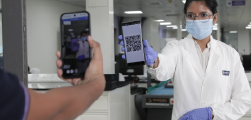
Identity Verified at Every Step
Verified identity at every step to eliminate sample mix-ups
empty star
STEP 02
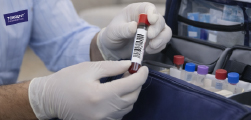
Sterile, Barcoded Collection
Sterile, barcoded collection to maintain sample integrity
empty star
STEP 03
Expert-Led Sample Collection
Trained professionals ensuring safe, accurate, and comfortable collection

FAQs To Help You Know Better

What is Hemoglobin Variant Analysis (Hb Electrophoresis)?
Hemoglobin variant analysis, commonly done by hemoglobin electrophoresis, is a laboratory test used to identify and measure different types of hemoglobin in the blood. It helps detect abnormal hemoglobin variants that can cause or contribute to blood disorders such as sickle cell disease, thalassemias, and other hemoglobinopathies.
Why is Hemoglobin Electrophoresis Done?
  • Diagnose hemoglobinopathies (disorders caused by abnormal hemoglobin structure or production), including
Offer Image