



OptiDraw: A New Standard in Smarter Blood Collection

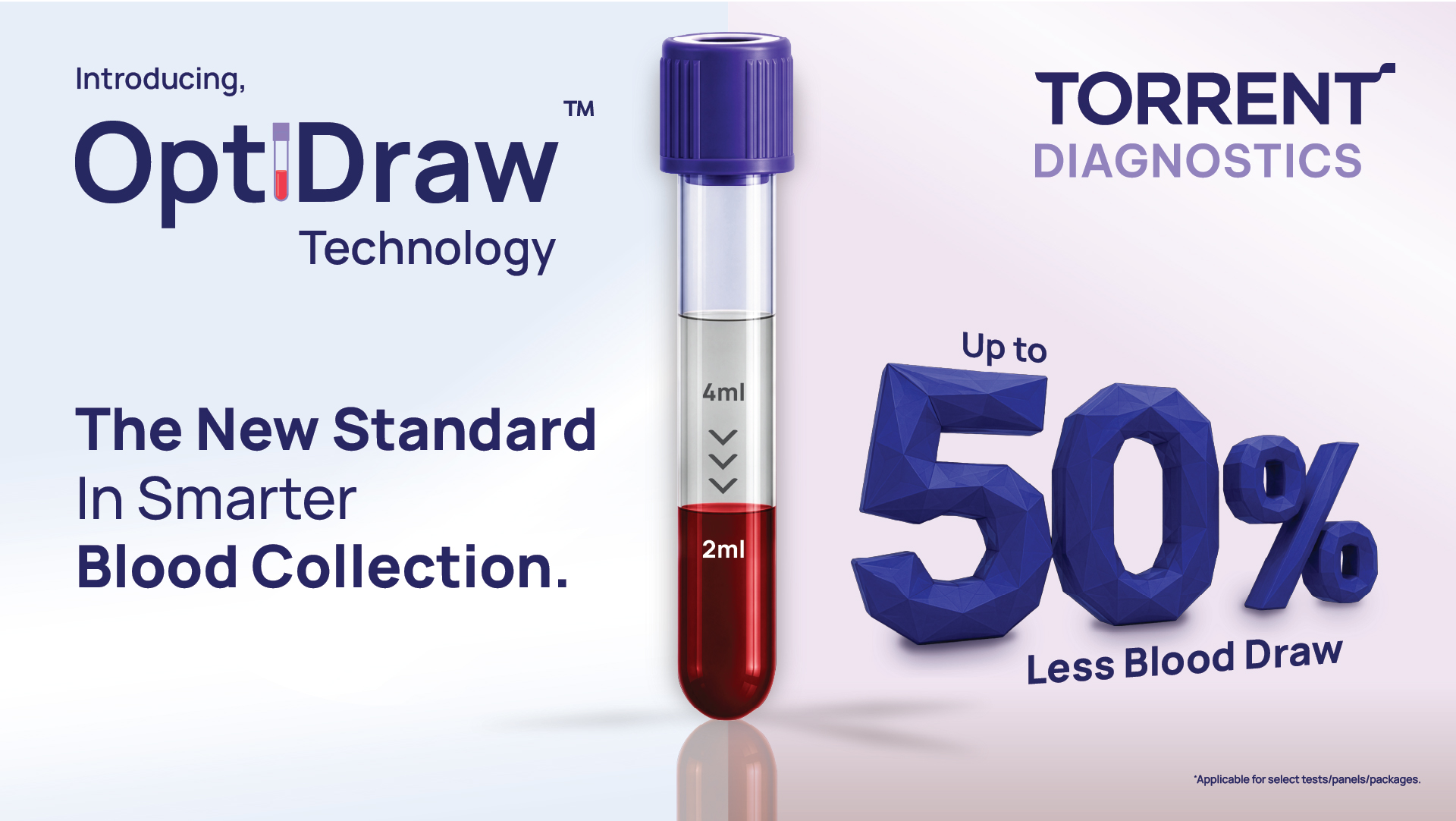
Table of Contents
Every time you get a blood test, you end up giving 4-5 ml of blood - whether it a single test like fasting glucose test, a routine one like complete blood count (CBC) test or a full body package with 80+ parameters.
But have you ever wondered if simple tests and comprehensive tests would require the same blood volume?
Well, most of us never thought of questioning it, because we've never been given a reason to (or even if we ever had a thought, it always skipped our mind).
The answer is not all tests require 4-5 ml of blood. In fact, you can now get your routine tests like CBC, liver function test, thyroid profile, kidney function test, lipid profile and more with as less as 2ml of blood. Introducing OptiDraw - a new standard in smarter blood collection. Here’s everything you need to know about it.
What Is OptiDraw?
OptiDraw is a smart blood collection technology that uses precision vacuum technology to collect as little as 2 ml of blood. And what makes it genuinely different isn't just that it's "less", it's the fact that the volume can test up to 67 parameters which include most of the routine tests.
Unlike conventional collection that has long treated a two-test order and a comprehensive full body panel the same way, drawing a standard volume by default, OptiDraw moves away from that default one-size-fits-all, collecting precisely what's needed with up to 50% less blood.
At Torrent Diagnostics, our modern diagnostic analysers are built to detect and measure markers with precision. Once a sample contains enough material to work with, beyond that threshold, additional blood doesn't add accuracy, it's simply excess.
This means OptiDraw doesn't compromise on quality; it draws precisely just 2ml of blood for routine tests/panel, debunking the assumption most of us have carried for years that "more blood volume is simply how testing works."
Let’s understand more about how OptiDraw can benefit people across different age groups like senior citizens and kids and different needs like people with delicate veins.
OptiDraw for Senior Citizens: When Fragile Veins Make Every Blood Draw Harder
As we age, our veins change in ways that make blood collection genuinely more difficult. Fragile veins in elderly patients are more prone to collapsing or bruising during collection, even when everything about the process is handled well. Vein walls become thinner and lose elasticity over time, making them more likely to roll or collapse under the pressure of a draw.
Dehydration, common among older adults, compounds this, making the veins both harder to access and more fragile once accessed. Add to this the natural thinning of skin that comes with age, and even a routine draw can leave bruising that lingers for days.
How a smaller, right-sized draw genuinely helps
- Less blood removed, less strain on the vein. Drawing 2 ml instead of a conventional 4–5 ml means meaningfully less volume is taken from an already fragile vein, which can translate to less trauma to the vein wall itself.
- A gentler collection process. OptiDraw's precision vacuum technology is calibrated for a controlled, low-deceleration draw; reducing the mechanical stress placed on blood cells and the vein during collection, compared to the higher, faster pressure conventional systems typically use.
- Faster recovery. Less blood removed generally means less bruising and a quicker return to normal, which matters more for elderly patients, as their healing process takes longer.
The Real Impact on Children With OptiDraw
For children, a blood draw is rarely just a physical event. It's an emotional one too, shaped by anticipation, unfamiliarity, and often, a fear built from what a needle represents more than what it actually feels like.
Why a smaller volume genuinely matters for children
- Proportionally significant. For a small child, 2 ml represents a much smaller share of their total blood volume compared to a conventional 4–5 ml draw.
- A shorter collection window. Drawing less blood generally means less time with the needle in place once collection begins; often a meaningful one for a child trying to stay still.
- Designed for smaller veins. OptiDraw pairs its reduced volume with a fine-gauge butterfly needle, built for smaller, more delicate paediatric veins. This makes it is a more considered fit than a standard needle sized primarily for adult use.
Understanding "Difficult Veins" and Where OptiDraw Fits
"Difficult veins" is a phrase many people have heard, but it's rarely about the veins being flawed. A few common, well-understood factors make blood draws genuinely harder are:
- Dehydration reduces how robustly veins fill, making them both harder to access and more prone to collapsing.
- Chronic illness requiring frequent testing as repeated draws over time can lead to scarring and hardening of vein walls in frequently used areas.
- Natural vein anatomy as some people simply have smaller, deeper, or more mobile veins by nature.
Remember, locating a viable vein remains a matter of clinical skill and individual anatomy. What OptiDraw changes is requiring smaller volume of blood as compared to conventional methods. And coupled with butterfly needle, this ensures gentler approach for the veins already prone to trauma.
The Science Behind OptiDraw: Quality Without Compromise
The most common question about reduced-volume collection is a fair one: does drawing less blood affect accuracy? It doesn't and here's why.
1. Precision vacuum technology. OptiDraw uses a calibrated, low-deceleration vacuum draw, rather than the high, rapid pull used in many conventional systems. This meaningfully reduces the mechanical stress or shear stress placed on red blood cells during collection, lowering the risk of hemolysis, a common and avoidable source of skewed or rejected results in conventional draws.
2. Properly matched sample ratios. Because OptiDraw's collection volume is calibrated to its intended fill level, the anticoagulant-to-blood ratio in each tube stays correctly balanced, avoiding the dilution-related errors that can occur when a larger, conventional tube is underfilled.
3. Built for modern lab automation. The diagnostic equipment at our National Reference Laboratory, powered by Total Lab Automation, is sensitive and precisely calibrated to run comprehensive testing on smaller sample volumes without any compromise in accuracy.
4. 3X Quality Checked, every time. Every OptiDraw sample goes through the same three-round quality verification process as every other sample at Torrent Diagnostics because reduced volume changes how a sample is collected, not how thoroughly it's checked before your report reaches you.
What OptiDraw Can Test?
From as little as 2 ml, OptiDraw supports testing across a wide range of parameters, including:
- Biochemistry — kidney function, liver function, lipid profiles, vitamin deficiencies, iron profile & thyroid function
- Hematology — complete blood count (CBC), HbA1c, hemoglobinopathies and TLC/DLC
- Immunology — antibody testing, immune function markers
- Infectious Disease — screening across a range of common infections
Disclaimer: OptiDraw is applicable only for tests/packages with a total parameter count of 67 or less.
The New Standard of Smarter Blood Collection
Blood collection volume was never meant to be one-size-fits-all. It just defaulted that way for a long time, largely unquestioned. OptiDraw's precision vacuum technology exists to correct that default, calibrating each draw to what a test genuinely requires, backed by the same rigorous 3X quality process behind every report we deliver.
Book your test with Torrent Diagnostics through our app, website, or convenient home sample collection and ask about OptiDraw. Because why give more blood when you can get the same results with just 2ml of blood.
Rate the article

Comments